How to Format Your Chicago Paper in 5 Minutes
A quick guide to Chicago style 17th edition: page setup, title page, in-text citations, footnotes and the bibliography, with examples.
 Written bySantiago MalleaReviewed byGradehacker editors
Published October 10, 2022Updated June 8, 2023
Gradehacker is free to read. Some links in our guides may pay us a small commission if you sign up, at no cost to you. It does not change what we write. How we make money
Key points
- Chicago has two systems: Author-Date, used in the sciences and social sciences, and Notes-Bibliography, used in the humanities.
- Use 1-inch margins, double spacing and a readable font of at least 10pt, with 12pt preferred.
- Author-Date in-text citations use the author's last name, year and page number, like (Smith 2022, 25).
- In the bibliography, list all names for two to ten authors; for more than ten, list the first seven followed by et al.
On this page
As a college student, it’s critical that you know how to write flawless academic papers. But one aspect that some writers underestimate is the citation style. And while most colleges ask for APA or MLA format style, there are many more.
One of them is the Chicago style citation format, which is currently in its 17th edition and incorporates significant changes that make it different from the other source citation formats.
You’ll have to do more than just include in-text citations and write your reference list in a specific way. It has two different varieties, but the most significant additions are the Chicago-style footnotes, besides the in-text citations.
This quick guide shows you how to format your paper in Chicago style 17th edition in just five minutes.
What is Chicago Style Citation?
The Chicago Manual of Style (CMOS) establishes your credibility among your fellow researches. It describes rules for writers of English, History, and Art.
There are two different documentation styles in CMOS:
Author-Date Style
The Chicago Author-Date system is often used in the sciences and social sciences fields. It works similarly to APA or MLA citation styles, as the source material is briefly cited in quotation marks and parenthesis, including the author’s last name and year of publication.
This in-text citation has to match the bibliography entries in the reference list added at the end of the paper, where complete publication information is provided.
Here you can find a Chicago author-date style sample paper.
Notes-Bibliography Style (NB)
The Chicago Notes and Bibliography system is often used in the humanities fields (including literature, history, and arts.) This style format requires writers to use footnotes or endnotes to demonstrate accountability to the source material better and avoid accusations of plagiarism,which is the intentional or accidental uncredited use of source material created by others.
While footnotes go at the end of the page where the in-text citation is placed, endnotes are located at the end of the document. However, both must have a superscript number corresponding to a note in the text and a bibliographic entry placed where it corresponds.
And just like in other citation formats, it has a reference list at the end with full publication details.
Here you can find a Chicago Notes-Bibliography style sample paper.

General Chicago Style Citation Guidelines
Regardless of which Chicago documentation style you have to use, the general guidelines you must keep in mind are:
- Your paper should be consistently double-spaced, except for block quotations, notes, bibliography entries, table titles, and figure captions
- Page numbers must be in the header of the first page
- Subheadings are intended to used in lengthier papers
- Margins should be set at 1"
- Font size should be no less than 10pt (preferable 12pt) and written in a readable font like Times New Roman or Courier
Title Page
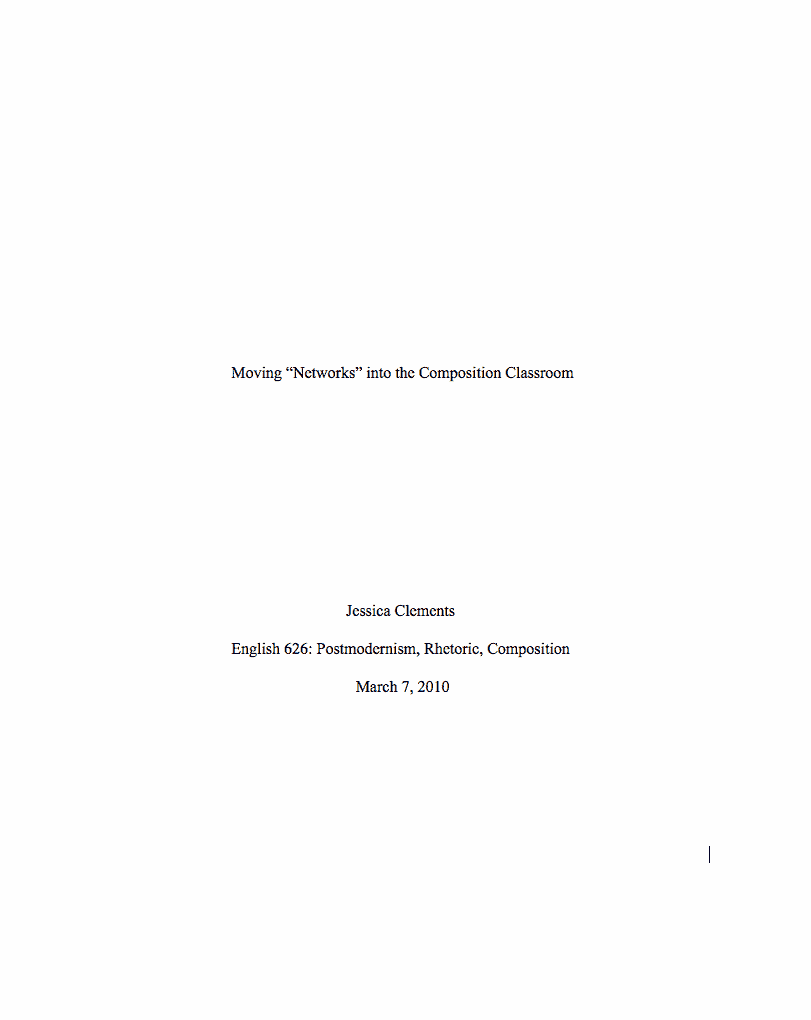
According to the Chicago Manual of Style, documents should include a title page or have the title on the first page of the text.
- Title should be centered in the middle of the page
- Include your name, class information, and date several lines later
- Subtitles must end with a colon and be placed below the article title
- Double-space each line of the article title page
In-Text Citations For Author-Date System
To quote any source title within your text in the Chicago Author-Date style, you will need the following:
Last name of the author + Year + Page number
Direct Quote Example
It is said that "adult learners study best in short, regular sessions" (Smith 2022, 25).
Number of Authors
If your source material has two or three authors, you’ll have to write the last name of its authors in alphabetical order.
"Studying should not be a lonely experience" (Doe and Smith 2022, 25)
"Studying should not be a lonely experience" (Doe, Roberts, and Smith 2022, 25)
Now, if your source material has four or more authors, you’ll have to list only the first and follow it by et al. (which means “and others.”)
"Studying should not be a lonely experience" (Smith et al. 2022, 25)
In-Text Citations For Notes-Bibliography System
As we explained above, to use indirect or exact quotes with the Notes-Bibliography style, you have to add a superscript number (beginning with 1) that will correspond to a footnote at the bottom of that page and a bibliography entry in the reference list.
Notes must be quoted like this:
Full name of the author, Title of publication (Publication city: Publisher, Year of publication), Page.
John Smith, Study Habits of Adult Learners (Chicago: Example Press, 2022), 25.
If you use an online source, like a digital journal article, an e-book, or a website, include the DOI or URL at the end of the note.
John Smith, Study Habits of Adult Learners (Chicago: Example Press, 2022), 25, https://www.example.com/study-habits-of-adult-learners
Number of Authors
Just like the Chicago Author-Date system, to quote source materials with two or three authors, you must list the last name of its authors in alphabetical order.
John Doe and John Smith, Study Habits of Adult Learners (Chicago: Example Press, 2022), 25.
John Doe, Mark Roberts, and John Smith, Study Habits of Adult Learners (Chicago: Example Press, 2022), 25.
And if you have four or more contributors, write the last name of the first author and add et al.
John Smith et al., Study Habits of Adult Learners (Chicago: Example Press, 2022), 25.

Reference List
To give full credit to your source material, you have to list all your sources in a Bibliography at the end of your work, so readers can easily find your references.
These are general guidelines that apply to both Chicago styles:
- Create it on a new page
- Use “References” for the Author-Date style
- Use “Bibliography” for the Notes and Bibliography style
- Leave two blank lines between the title” and your first entry, and one blank line between the remaining entries
- Bibligraphic entires must be listed in alphabetical order according to the author’s name or the article title
- Use “and,” not an ampersand (&) for multi-author entries
Number of Authors
- Two to ten authors: List all names
- More than ten authors: List the first seven in the bibliography, followed by et al.
- No identifiable author: Cite with the title of publication
Citations For Books
Last name, First name. Title of Book. Place of publication: Publisher, Year of publication.
Smith, John. Study Habits of Adult Learners. Chicago: Example Press, 2022.
Doe, John, and John Smith. Study Habits of Adult Learners. Chicago: Example Press, 2022.
Citations For Periodicals
Last name, First name. “Article Title.” Journal Title, Issue information
Smith, John. "Why Student Loan Debt Has Grown So Fast." Example Journal of Education 12, no. 1 (2022): 20-25.

Write in Chicago Style Citation Without Any Mistakes!
Now you are ready to write your paper in the Chicago style citation format.
Save this blog post, and keep it at hand so you can refer back to it whenever you have doubts about how to format your paper using Chicago style.
To facilitate the process, remember you can use one of the many Chicago-style citation makers available online. We recommend Citation Machine or MyBib, and here you can find the Best Citation Machines for College Students.
They are super easy to use and can help you save valuable time. Still, you should always check that its source citations are correct, as sometimes AI can fail.
Do you want more helpful college tips on how to improve your writing? Check out these related blog posts:
New video, new guide, every Sunday
One short email with what we published that week, picked for adults going back to school.
More on study skills
All study skills guides
The Best Time Management Techniques to Tackle Any Task
Eight time management techniques explained with steps and examples, including Pareto, Pomodoro, the Eisenhower Matrix and time blocking.
8 min read

How To Make Your Online Classes Easier
Simple ways to make online classes easier, from setting up a study space and routine to apps that help with writing, notes and reading.
9 min read

Study Habits That Keep College Students Focused
Daily and study-session habits that help you stay focused in college without relying on coffee or energy drinks, plus apps that help.
6 min read